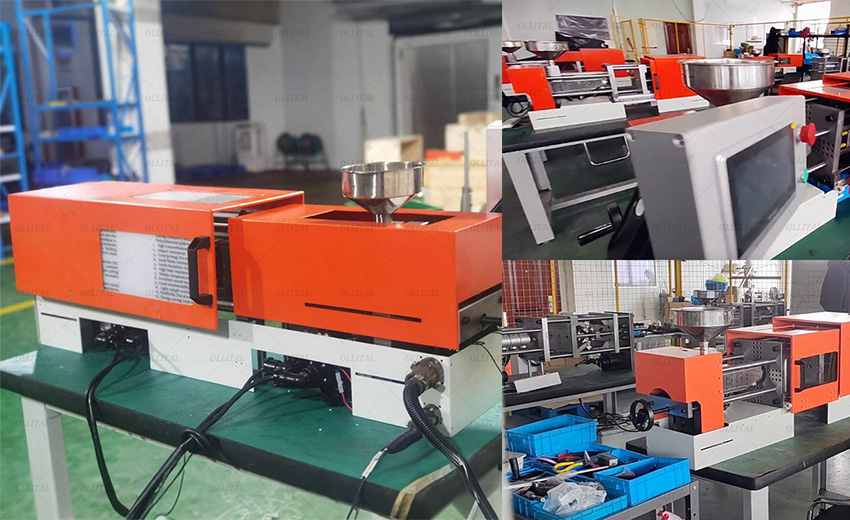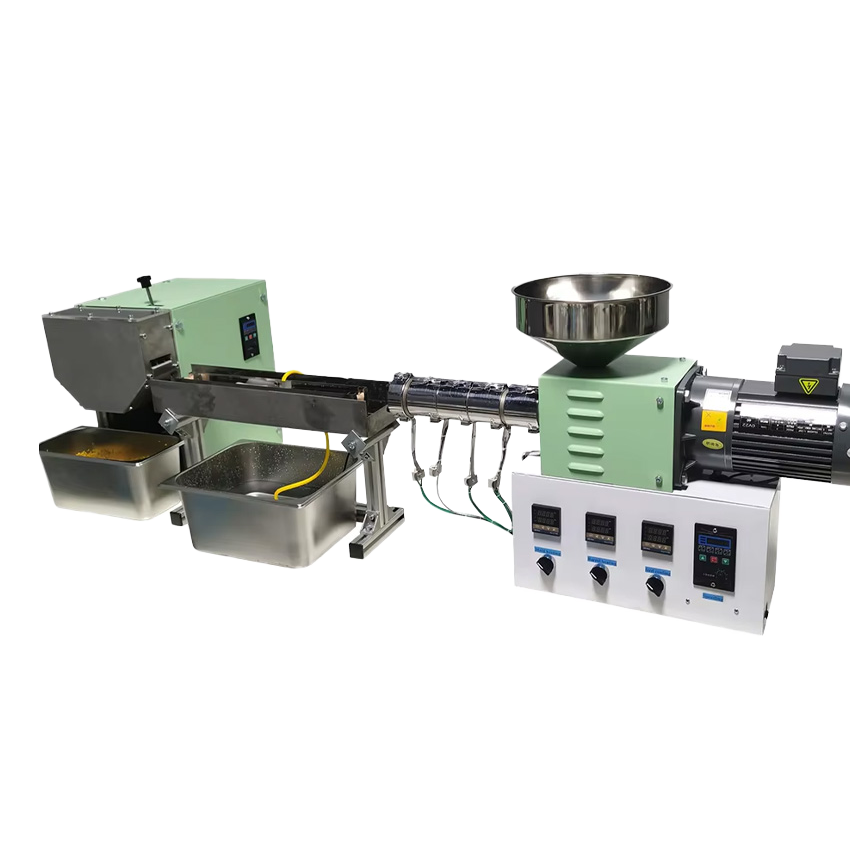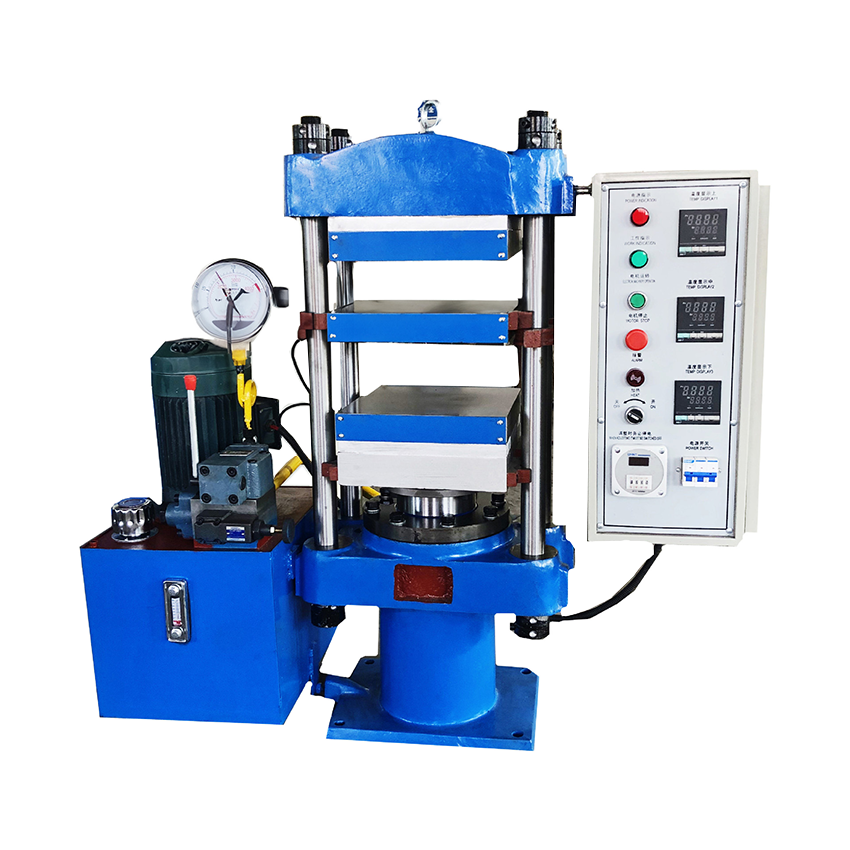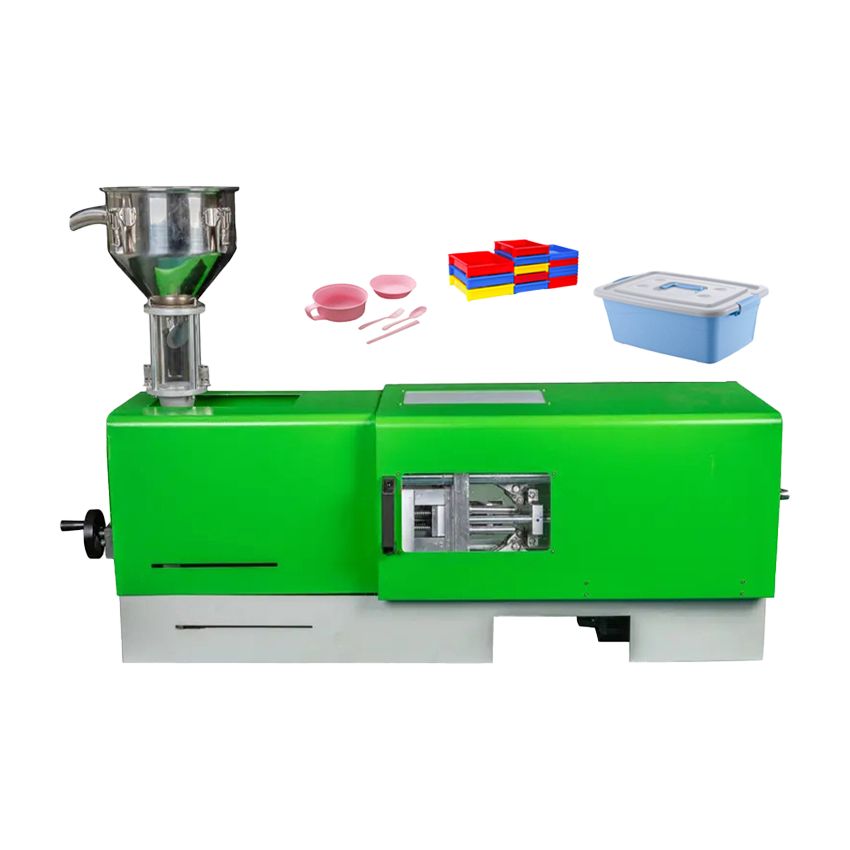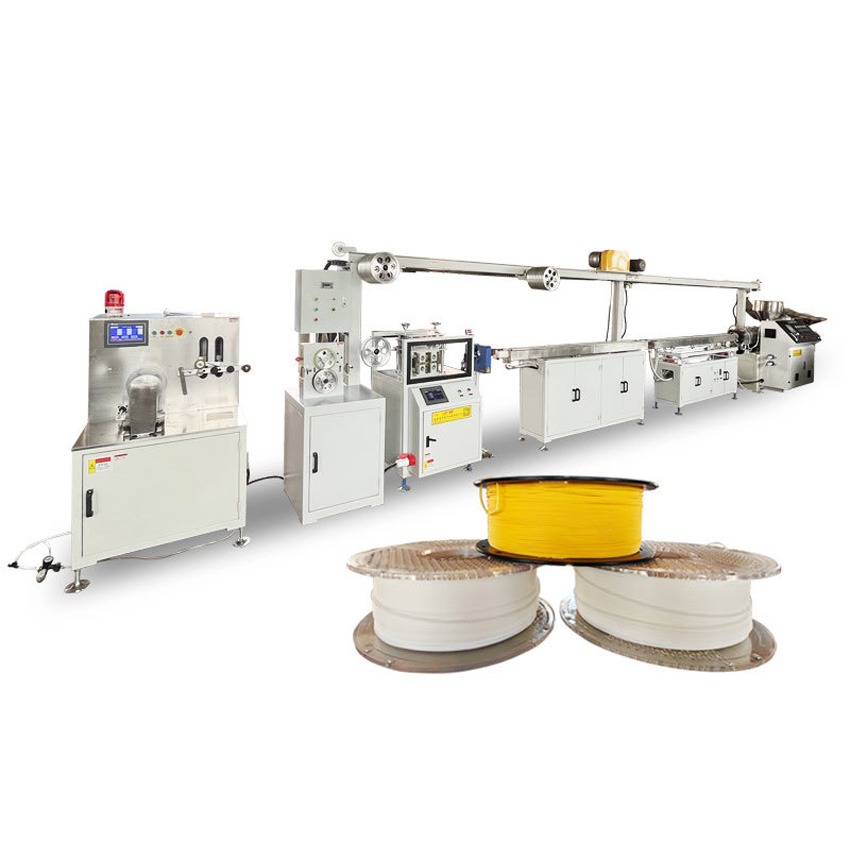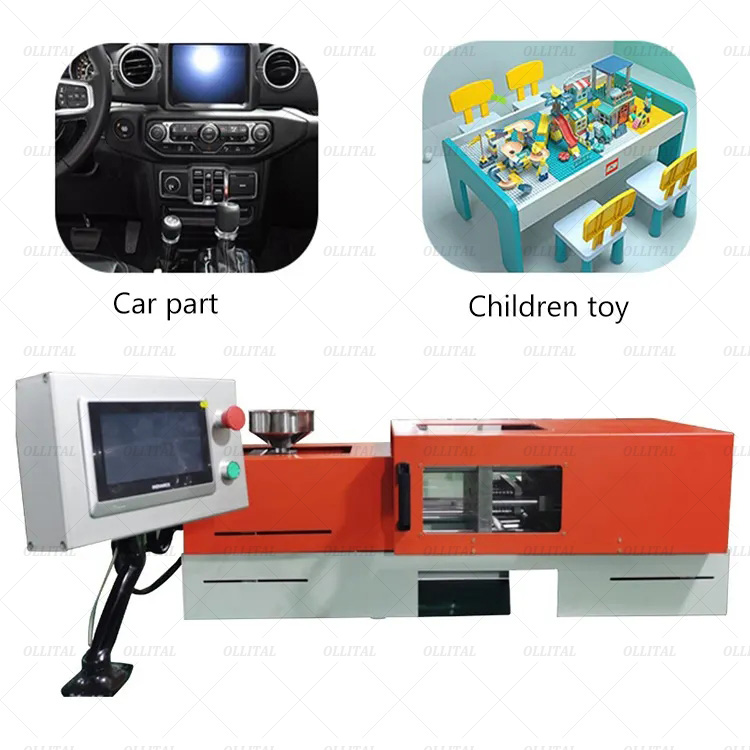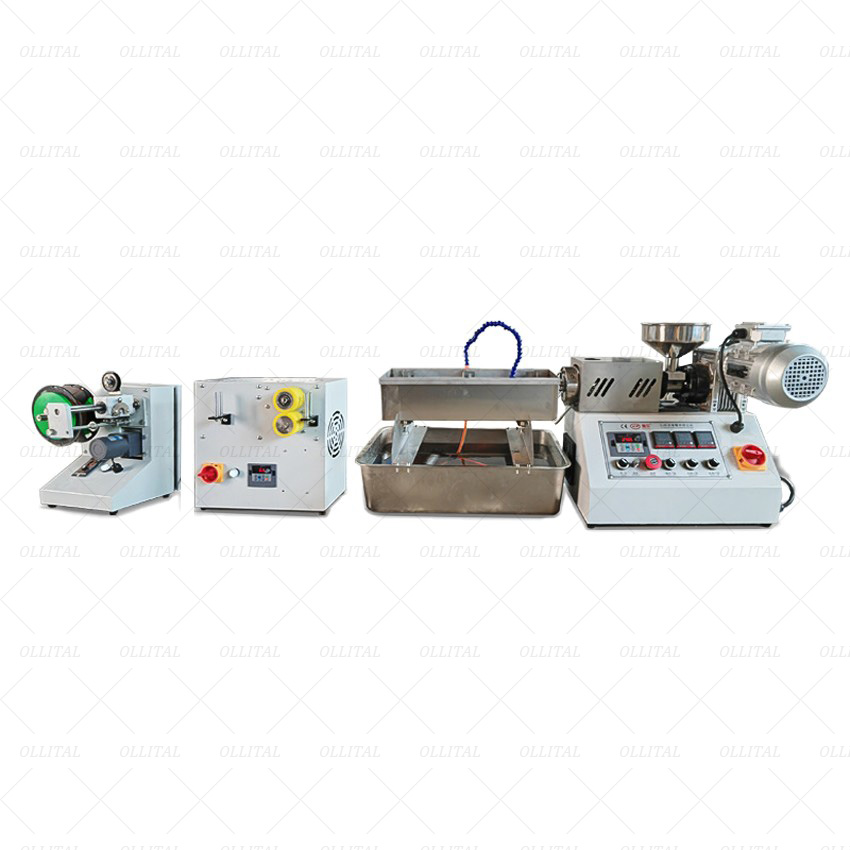
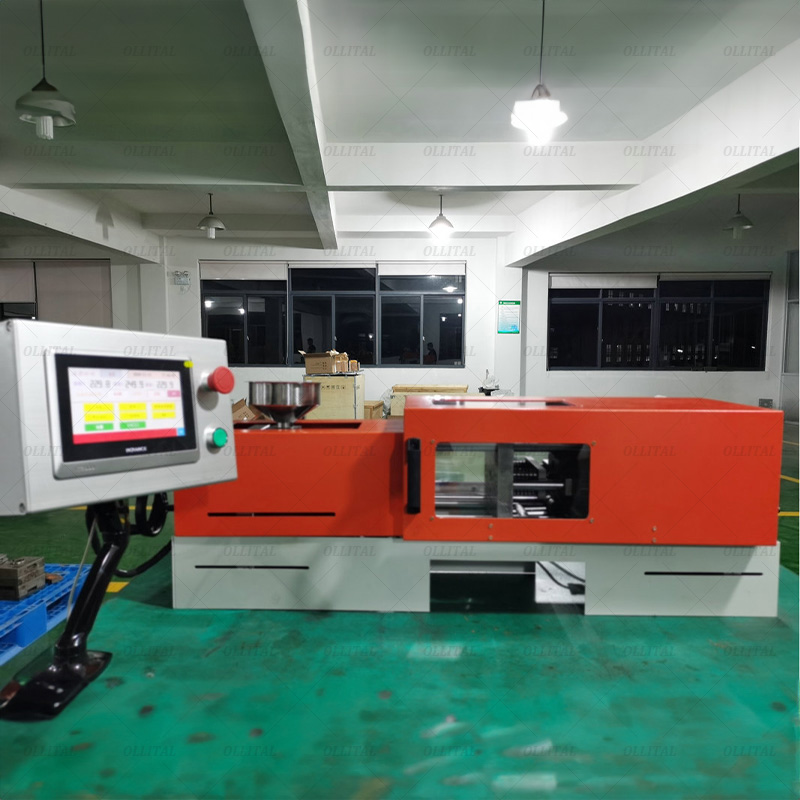
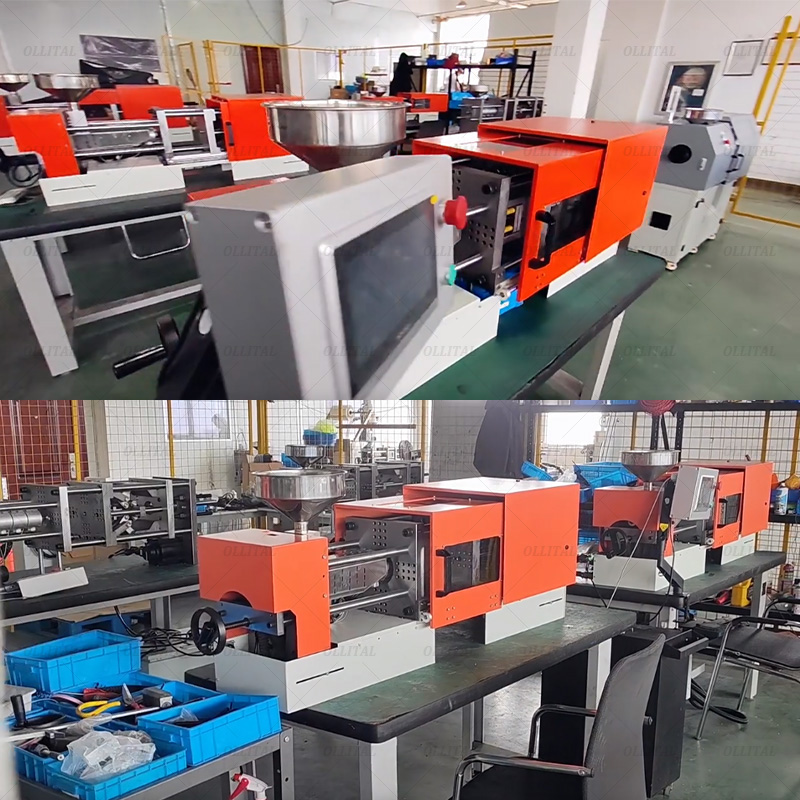
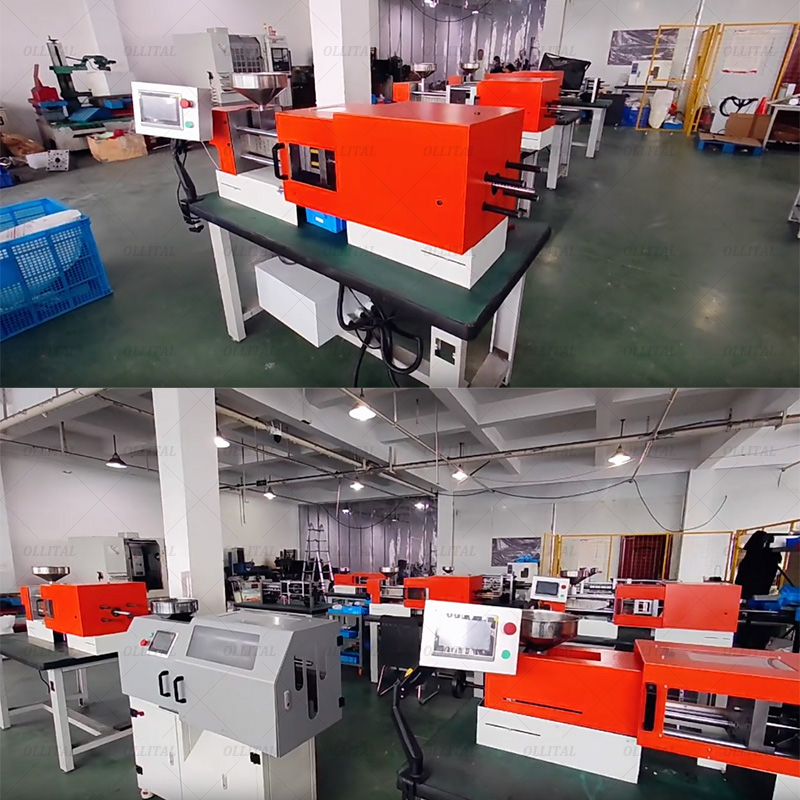
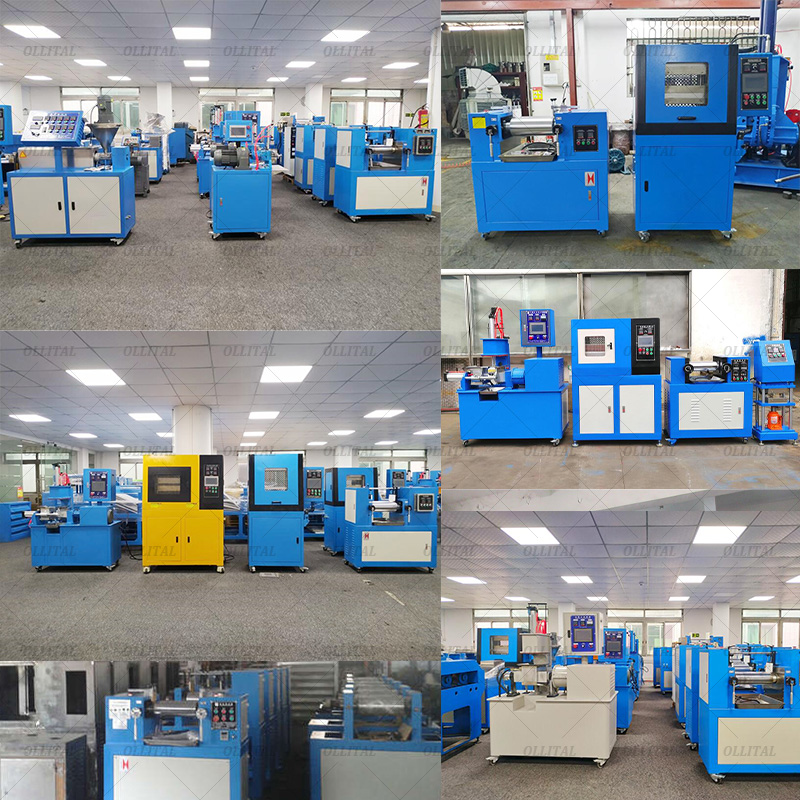
Mini desktop injection machine is the most cost-effective way to produce the small plastic components in the market. As a redesigned and optimized model of the traditional injection machine, and easy to apply for prototyping, testing, new product development and small part production. Easy for maintenance, fast changing mold and lower investment for production.
Features
- Compact size: Compared with traditional injection molding machines, the size of small injection molding machines is significantly reduced. For example, a desktop miniature injection molding machine is only 1.1 meters long and can be used in limited spaces such as small factories, laboratories, and home workshops, saving space.
- Simple operation: Usually equipped with an intelligent control system and a user-friendly operation interface, operators can get started after simple training, reducing the operation difficulty and labor costs.
- Flexible production: Suitable for the production of multiple varieties in small batches. It can quickly switch different molds to produce different products, cope with diverse market demands, improve production efficiency and product quality, and enhance the market competitiveness of enterprises.
- Energy conservation and environmental protection: Some small injection molding machines use an electric drive system, reducing the dependence on traditional hydraulic systems, lowering energy consumption and exhaust emissions, meeting environmental protection requirements, and saving operating costs in the long run.
- Diverse products: Although small in size, they can produce injection-molded products of various specifications, and are capable of producing everything from small components to complex products, meeting the needs of different industries.
Application Areas
- Production of miniature precision parts: In fields such as electronics, telecommunications, instrumentation, automation devices, clocks and watches, and medical equipment, it is used to produce miniature precision injection-molded parts, such as electronic components, mobile phone accessories, clock and watch gears, and medical device components.
- Small batch production: It is an ideal choice for small enterprises and individual businesses to produce products in small batches. They can produce flexibly according to the order quantity, avoiding inventory backlogs and cost waste caused by large-scale production.
- Laboratory testing and sampling: When scientific research institutions and laboratories are developing new products or testing the performance of materials, it is used to make test specimens or small samples, facilitating researchers to quickly obtain experimental data and optimize product designs and process parameters.
- Teaching and training: It is a practical device for schools and training institutions to carry out teaching and training of injection molding processes, enabling students and trainees to intuitively understand the principles and operation processes of injection molding and improve their practical abilities and skill levels.
Main Types
- Electric injection molding machines: Adopting full-motor drive and PLC, frequency conversion, and servo control technologies to achieve high-precision control and energy conservation, avoiding the problems of noise, heat generation, and oil leakage of hydraulic injection molding machines. In terms of the injection molding structure, it uses a screw-plunger hybrid structure and a PID temperature control method to ensure the stability of plasticization and metering, making it suitable for the production of miniature precision injection-molded parts in fields such as microelectronics products.
- Full-hydraulic injection molding machines: Using a full-hydraulic control system, it has a strong injection force and can meet the injection molding of high-precision small parts. It has multiple working modes, integrating screw plasticization and injection, with synchronous melting and injection of the plastic, sufficient plasticization, fast heating of the barrel, and shortened injection molding cycle.

view more
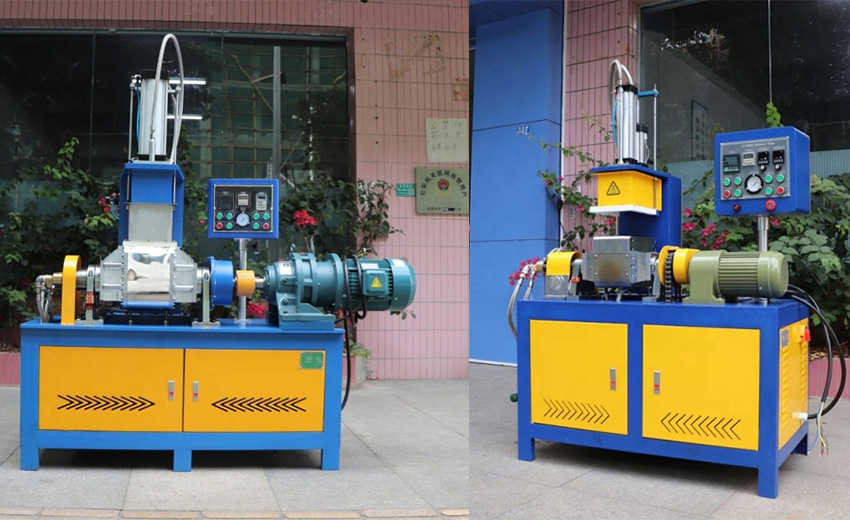
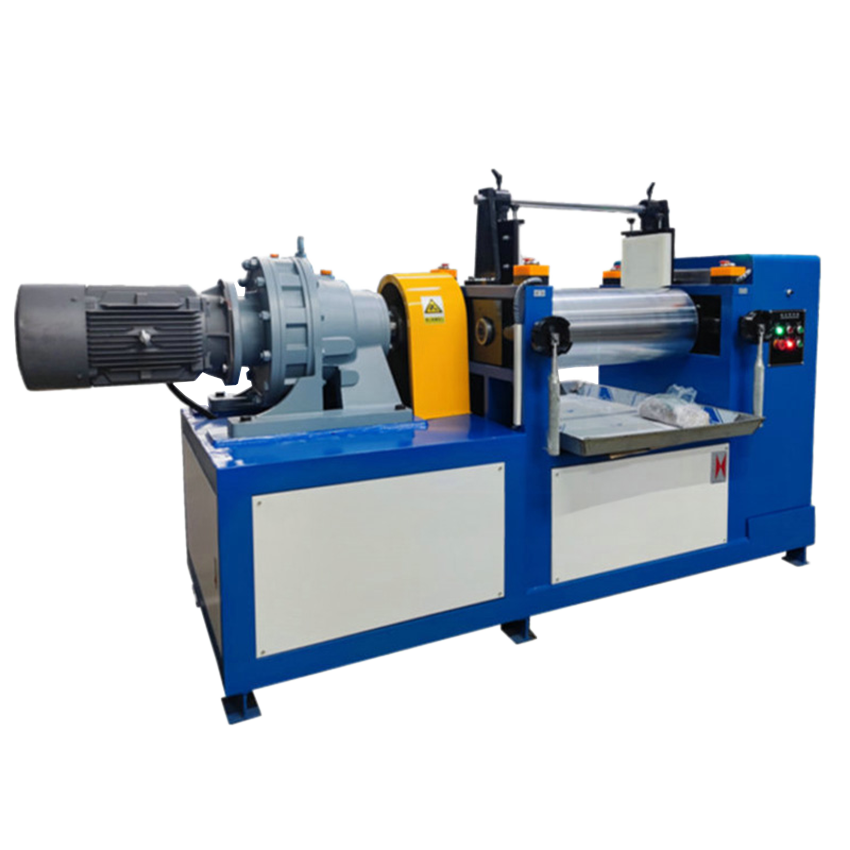
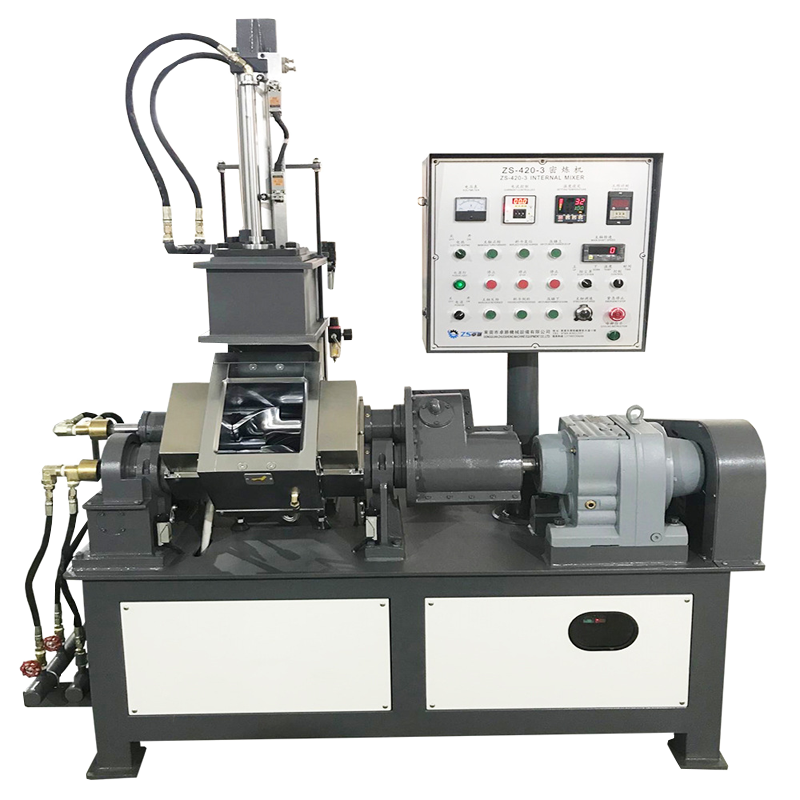
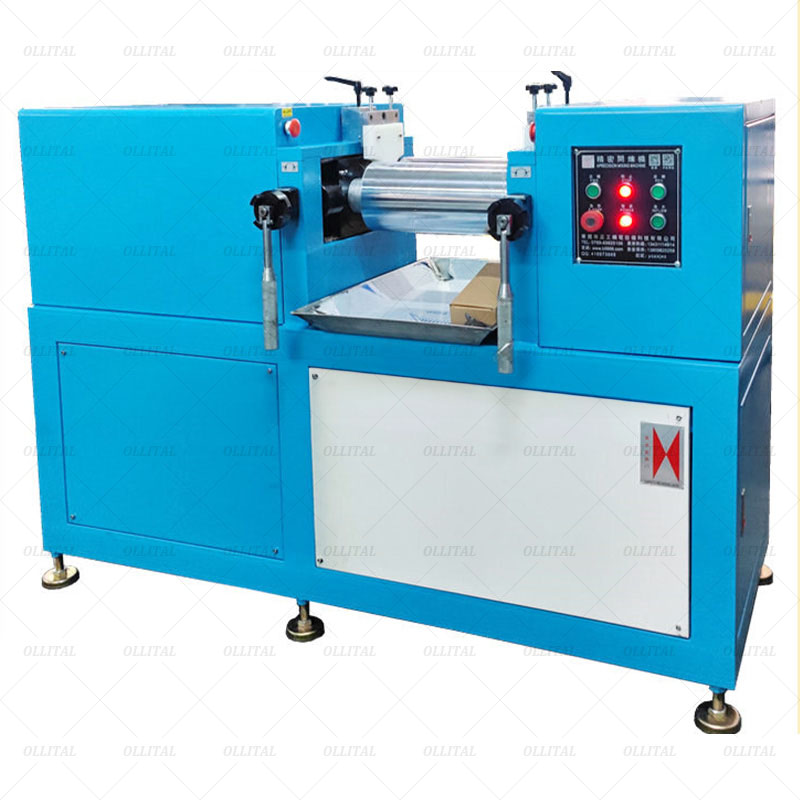
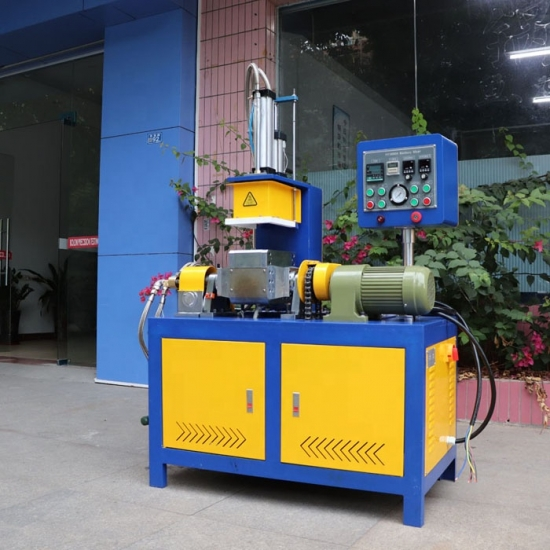
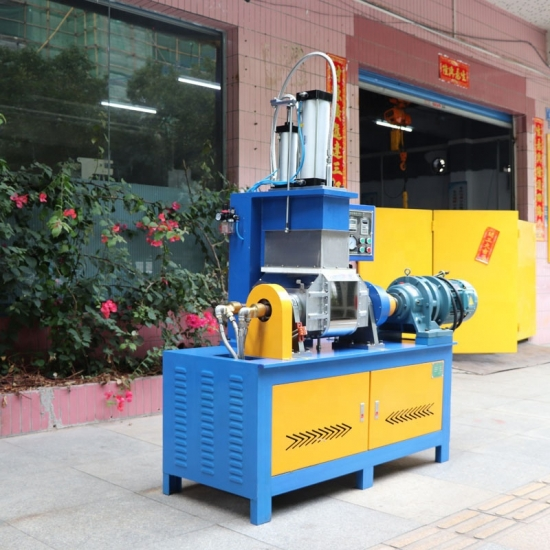
The internal mixer is a kind of machinery that is equipped with a pair of rotors of specific shapes and rotating relatively. It intermittently plastifies and mixes polymer materials in a closed state with adjustable temperature and pressure. It is mainly composed of parts such as the internal mixing chamber, rotors, rotor sealing device, feeding and pressing device, discharging device, transmission device, and machine base.
Working principle
During operation, the two rotors rotate relatively, clamping the materials from the feeding port and bringing them into the nip. The materials are squeezed and sheared by the rotors. After passing through the nip, they hit the sharp edge of the lower ram and are divided into two parts, which respectively return to the upper part of the nip through the gaps between the front and rear chamber walls and the rotors. During one cycle of flowing around the rotors, the materials are subjected to shearing and friction everywhere, causing the temperature of the rubber compound to rise sharply and the viscosity to decrease, increasing the wettability of the rubber on the surface of the compounding agents and enabling the rubber to fully contact the surfaces of the compounding agents.
Main parameters
These include the rotational speed and speed ratio of the rotors, the gap between the rotor edges and the inner wall of the internal mixing chamber, production capacity and filling coefficient, the unit pressure of the upper ram on the rubber compound, power, etc.
Operation method
First, calculate the amount of rubber to be mixed at one time and the actual formulation according to the capacity of the internal mixing chamber of the internal mixer and the appropriate filling coefficient, and then accurately weigh the amounts of various raw materials. Turn on the power and heating switch for preheating, and check whether the relevant systems are normal. After preheating, lift the upper ram and put in the raw rubber, lower the ram and mix the rubber for a period of time. Then, add small ingredients, carbon black or fillers, liquid softeners, etc. in sequence and continue mixing. Finally, discharge the rubber and record the relevant data.
Influencing factors
The quality of the mixed rubber compound is affected by factors such as the charging capacity, feeding sequence, pressure of the upper ram, structure and type of the rotors, rotational speed, mixing temperature, and mixing time.
Types
It can be divided into open internal mixers, closed internal mixers, vertical internal mixers, and horizontal internal mixers.
Internal mixers are mainly used in the following aspects:
- Production of tires: It is used to mix rubber with various additives such as carbon black, sulfur, and accelerators to improve the wear resistance, strength, and elasticity of tires.
- Manufacture of rubber products: In the production of rubber hoses, belts, seals, etc., internal mixers are used to evenly mix rubber and fillers to ensure the quality and performance of products.
- Preparation of plastic compounds: Internal mixers are used to mix plastics with additives such as stabilizers, plasticizers, and colorants to improve the properties of plastics and meet different application requirements.
view more
Product Description
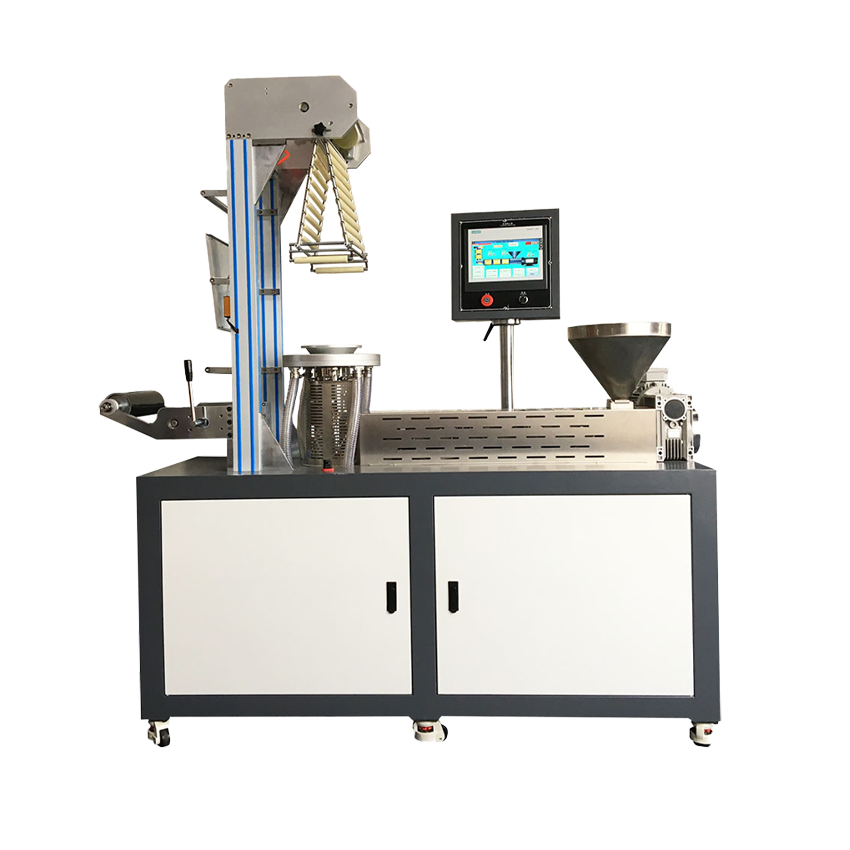
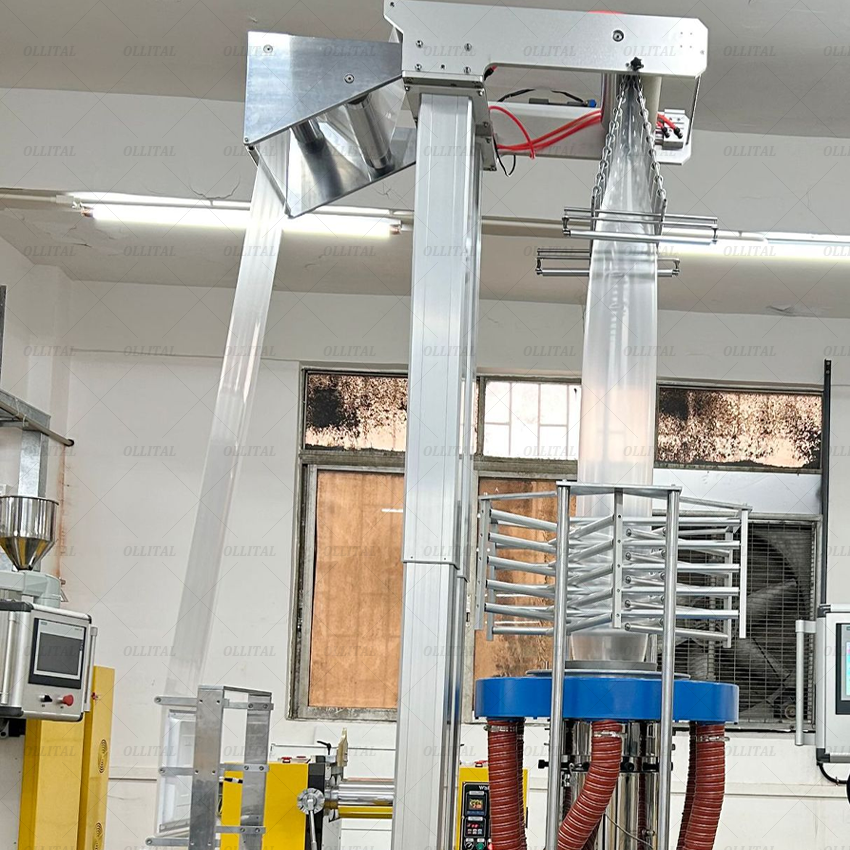
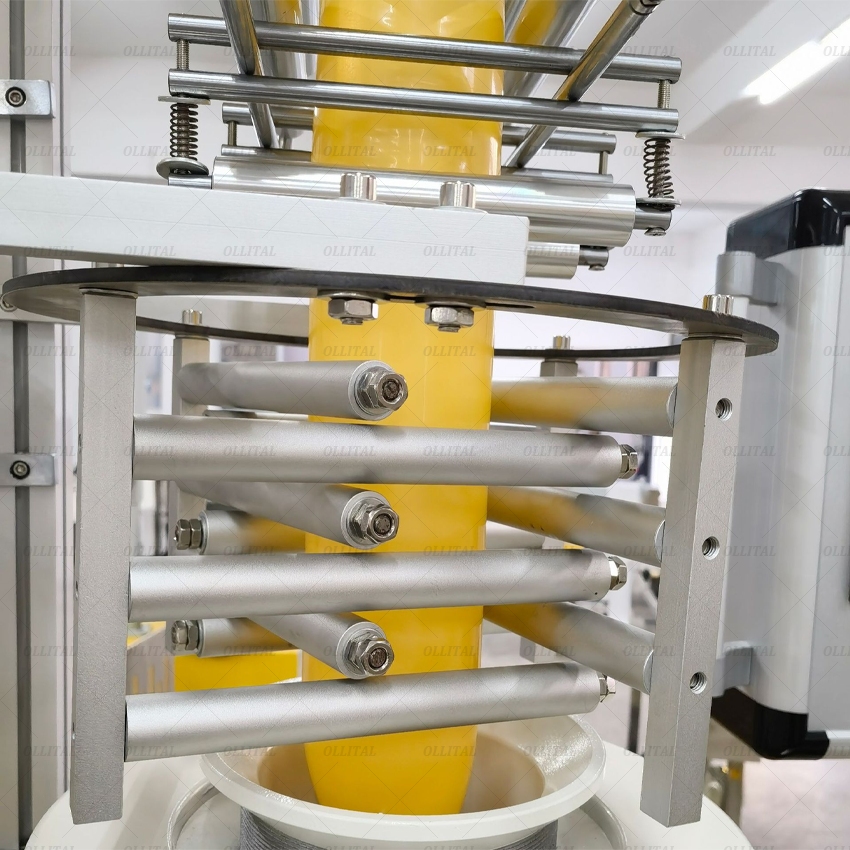
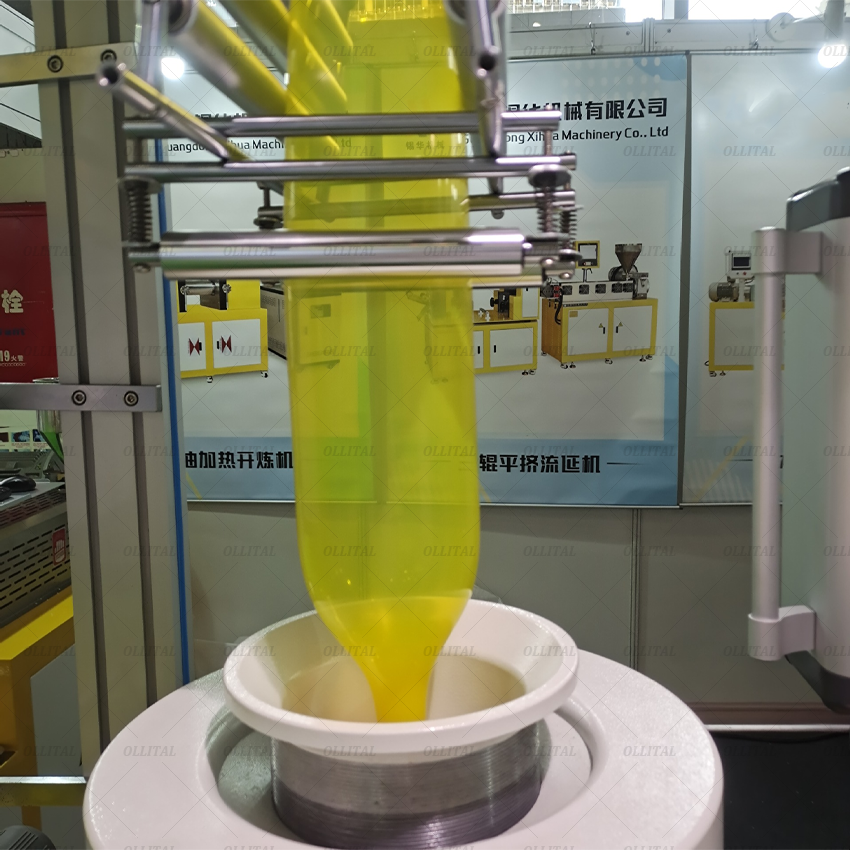
National patent small laboratory film blowing machine, applicable to a variety of materials bonding, masterbatch dispersion performance measurement, optimization of production process parameters, the study of the material's blown film molding performance, is a scientific research, teaching demonstration, production enterprise laboratory use. Small precision three-layer co-extrusion blown film machine consists of three precision single-screw extruder, three-layer co-extrusion blown film die head and blown film auxiliary machine, using precision extrusion and high-performance blown film molding technology, wide range of adjustment of process parameters, equipment applicability. It can be used for polymer material performance testing and blown film molding process research, can be equivalent to the production line, can improve the experimental efficiency, shorten the product development cycle, is the ideal experimental equipment for high-precision, high-performance film molding.
Equipment features:
Ø Adopts servo motor drive, stepless accurate speed regulation, stable plasticizing and good consistency.
Ø Digital design co-extrusion die head, smooth flow channel without dead-end stagnant material, even material discharge
Ø Electric lifting of film frame is convenient for film guiding and process adjustment.
Ø Adopts vector wind ring, energy saving and low noise.
Ø Professional customized small diameter film bubble control, stable width.
Ø Traction servo motor speed closed-loop control, longitudinal film speed is accurate and stable.
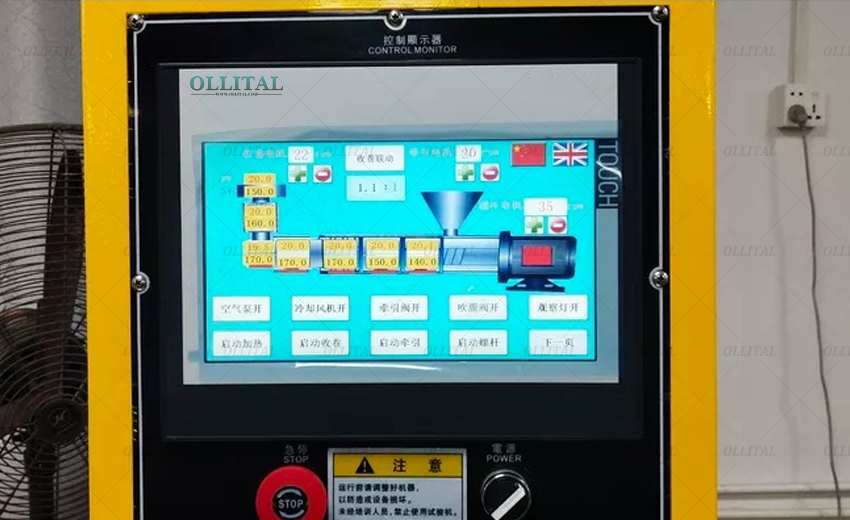
Ø Computer-based measurement and control system with friendly operation interface, easy to control and more powerful functions.
Ø Real-time measurement and graphic display of important data such as extrusion system, easy to observe.
Scope of application:
Ø For color masterbatch manufacturing company to test the “color separation” and “plasticity” of color masterbatch.
Ø For large-scale blown film factories to test materials.
Ø Functional masterbatch for testing performance
Ø For universities, research institutes and enterprises to test the material properties of new materials.
Ø New material formulation development
Ø Blown film performance testing
Ø Blown film production process optimization
Ø Preparation of three-layer blown tubular film
Instrument features:
1.Extruder is driven by servo motor of international brand, with stable plasticization and good consistency;
2.Extruding device: Barrel and screw are the key parts of this machine, where plasticizing and extruding of materials are carried out. The barrel and screw are made of high-quality nitrided steel 38crmoala, and the surface has been treated with one-week gas nitriding, which has good mechanical properties such as high hardness, wear-resistance and corrosion-resistance, and greatly prolongs its service life.
3.The barrel heating of this machine adopts cast aluminum heater with stainless steel wind cover, which is beautiful and energy-saving, with good heat-resistant performance, long service life, even heat transfer, and easy to be replaced; the fan cools through the set channel (automatically opens the fan for cooling in case of over-temperature), which has a good cooling effect.
4.Transmission device: Drive motor and reducer directly connected to the reducer output shaft and screw connection, drive screw rotation. The transmission device has a compact structure, smooth operation and strong bearing pressure.
5.Emergency stop device and all kinds of safety protection, to protect the safety of operators;
6.Highly intelligent, easy to operate.
view more
Three-Layer Casting Machine Introduction
The three-layer casting machine is a type of equipment used to produce multi-layer films or sheets by extruding and combining three different materials simultaneously. It is widely used in various industries, including packaging, electronics, and medical fields.
Working Principle:
1. Material Feeding:Three different materials are fed into separate extruders.
2. Melting and Extrusion: Each extruder melts and extrudes its respective material into a molten state.
3. Layer Formation: The three molten materials are combined in a multi-manifold die or feedblock to form distinct layers.
4. Casting: The combined molten layers are cast onto a chilled roll or through a water bath to solidify into a film or sheet.
5. Winding: The solidified film or sheet is wound onto rolls for further processing or packaging.
Advantages:
⑴The extruder is driven by an international brand variable frequency motor, with stable plasticization and good consistency;
⑵Extrusion device: The barrel and screw are the key parts of this machine, where the plasticization and extrusion of the material are carried out. The barrel and screw are made of high-quality nitrided steel 38CrMoALA, and the surface has been treated with gas nitriding for one week, with good mechanical properties such as high hardness, wear resistance and corrosion resistance, which greatly extends its service life.
⑶The barrel heating of this machine adopts mica heater, and the outer cover is a stainless steel wind cover, which is beautiful and energy-saving, has good heat resistance, long service life, uniform heat transfer, and easy replacement; the fan is cooled through the set channel (automatically open the fan for cooling when overheating), and the cooling effect is good.
⑷Transmission device: The drive motor is directly connected to the reducer, and the output shaft of the reducer is connected to the screw to drive the screw to rotate. The transmission device has a compact structure, stable operation, and strong bearing pressure.
⑸Emergency stop device and various safety protections to ensure the safety of operators; high intelligence and easy operation.
Applications:
Packaging: Food packaging, pharmaceutical packaging, industrial packaging.
Electronics: Flexible printed circuit boards, insulation films, display films.
Medical: Wound dressings, drug delivery systems, medical device components.
Types of Three-Layer Casting Machines:
Co-extrusion Casting Machine: Combines three extruders and a multi-manifold die to produce three-layer films.
Lamination Casting Machine: Combines pre-formed films or sheets with an adhesive layer to create a three-layer structure.
Selection Considerations:
Material Properties: The materials used must be compatible with each other and the processing conditions.
Layer Thickness: The desired thickness of each layer will influence the machine design and processing parameters.
Production Capacity: The required output rate will determine the size and speed of the machine.
End-Use Application: The specific requirements of the final product will guide the selection of materials and machine features.
Three-layer casting machines are essential tools for producing high-performance multi-layer films and sheets for a wide range of applications. Their versatility, efficiency, and ability to create innovative material combinations make them valuable assets in various industries.
view more
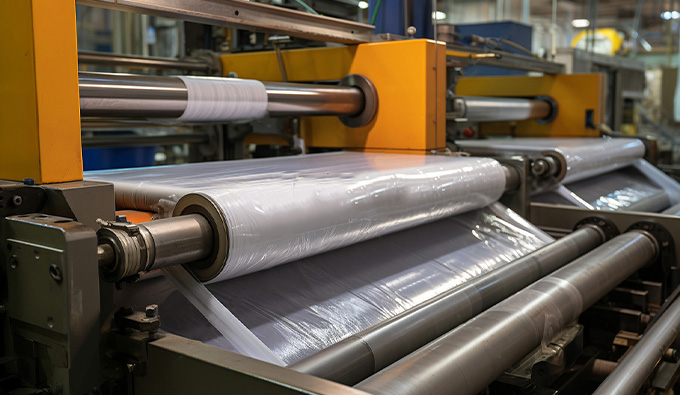
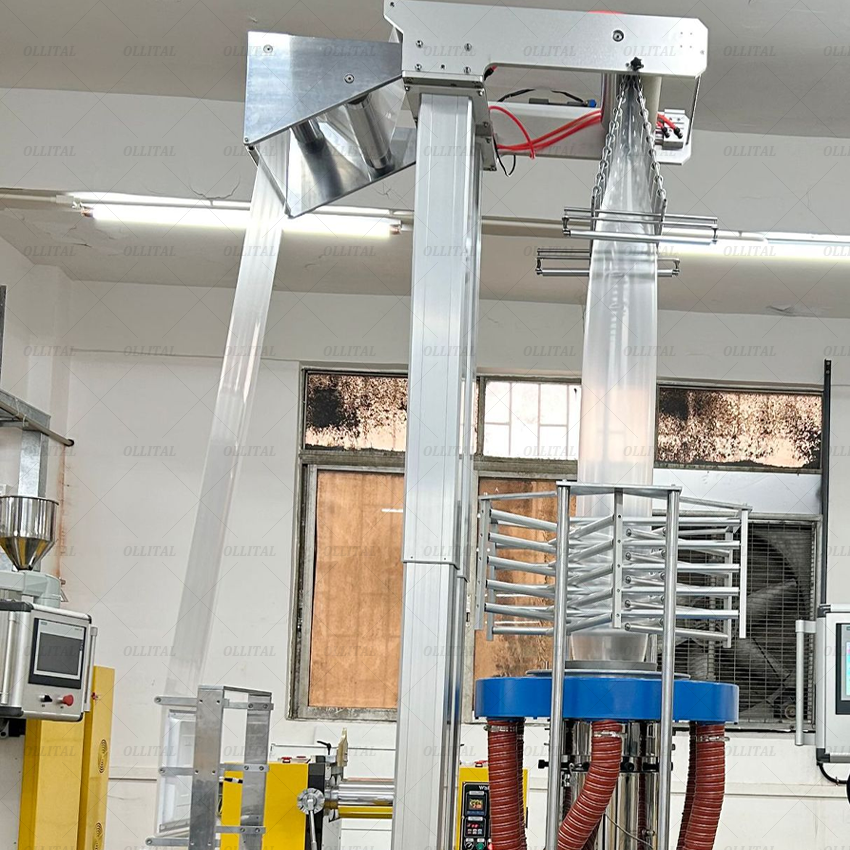
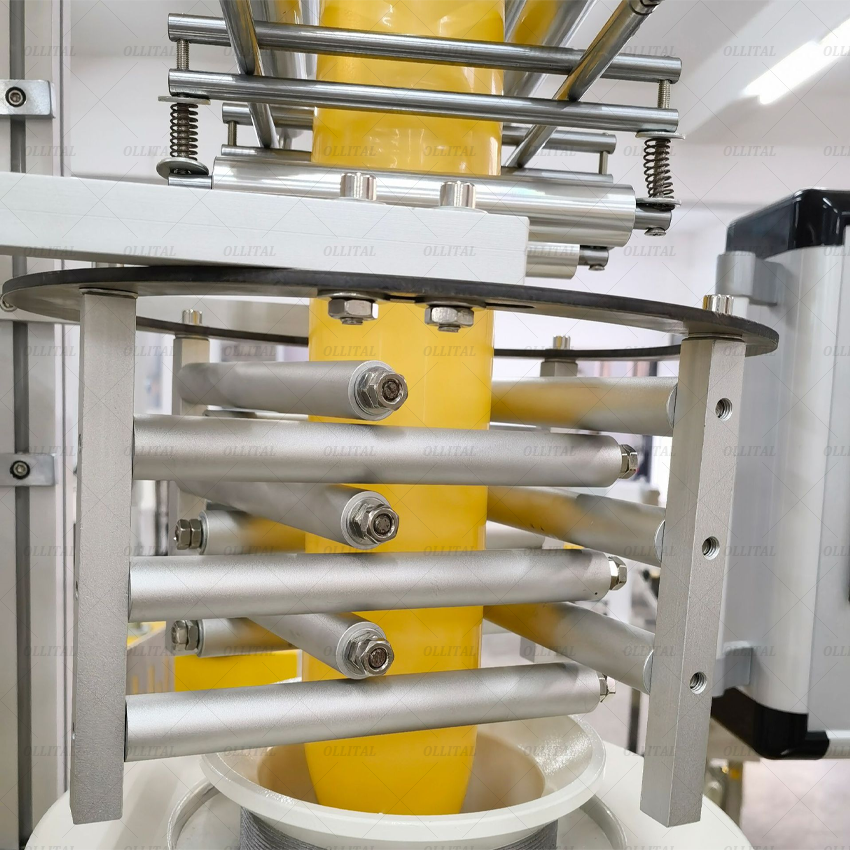
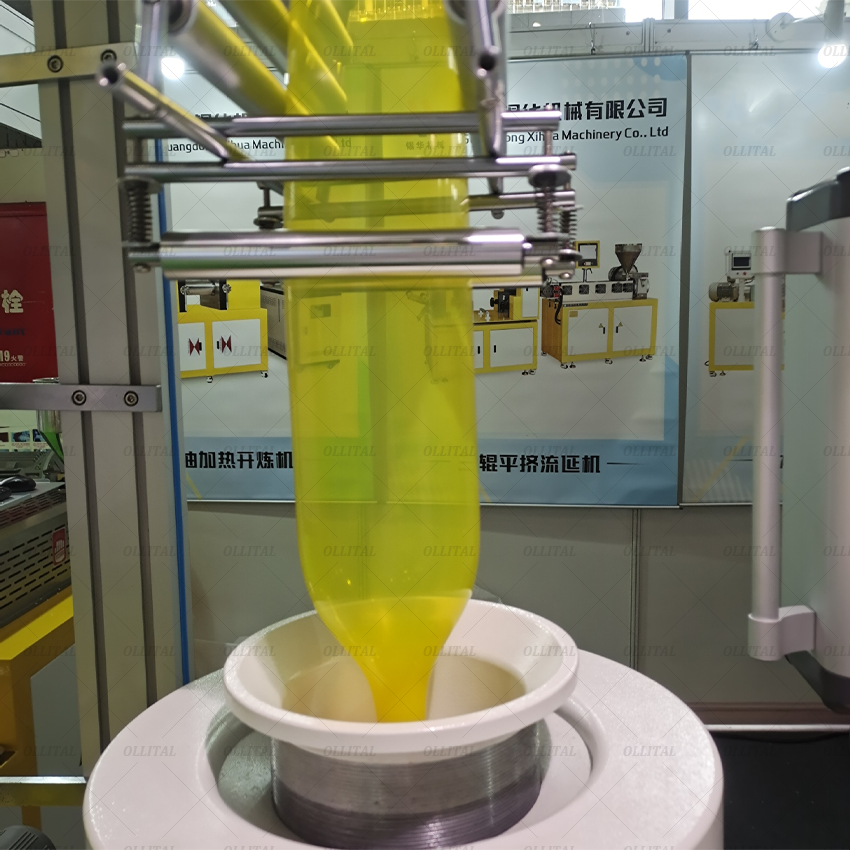
Film blowing machine is a kind of equipment used to produce plastic film, which is widely used in packaging, agriculture and industry. Its basic working principle is to heat and melt plastic particles, extrude them through the die head and use the airbag device to expand them to form a film. The main components of the film blowing machine include extruder, die head, cooling system and winding device. It can adjust the thickness, width and performance of the film according to the needs to adapt to the needs of different markets. It is worth mentioning that modern film blowing machines can adjust the thickness, width and performance of the film according to different needs to adapt to the specific needs of different markets. In addition, modern film blowing machines usually have advanced features such as high efficiency, automatic control and energy-saving design, which significantly improves the quality and efficiency of production.
The film blowing machine consists of an extruder: a die, an airbag device, a cooling system, a winding device, and a control system. Its operating process is as follows:
Raw material feeding: Plastic particles (such as polyethylene, polypropylene, etc.) enter the extruder through a feeding device.
Melting extrusion: In the extruder, the plastic particles are heated to a molten state and extruded through the rotation of the screw to form a molten plastic flow.
Die head molding: The molten plastic flow passes through the die head to form a uniform tubular film.
Gas inflation: Air is introduced through the center of the die head to expand the tubular film outward to form the required film thickness and width.
Cooling and shaping: The expanded film passes through a cooling device to quickly solidify and maintain its shape.
Winding: The solidified film is rolled into a roll for subsequent processing and use.
This process can produce plastic films of various thicknesses and widths, suitable for different application scenarios.
Packaging industry: used to produce food packaging, shopping bags, express bags, cling film, etc.
The role of film blowing machines in the packaging industry is very important. Food packaging: producing transparent cling film, vacuum packaging film, etc., can extend the shelf life of food and reduce waste.
Industrial packaging: manufacturing plastic films for industrial products, such as packaging machinery parts, electronic products, etc., to protect products from the external environment. Daily necessities.
packaging: producing disposable shopping bags, garbage bags, cleaning films, etc., for consumers to use. Special functional films: such as moisture-proof films, anti-ultraviolet films, degradable films, etc., to meet specific packaging needs.
Agriculture: used to make agricultural films, ground films and greenhouse films, which help to increase crop yields and protect plants. Ground films are used to cover the soil, helping to maintain soil temperature, reduce water evaporation and inhibit weed growth, thereby increasing crop yields. Greenhouse films are used to make greenhouse films, providing a suitable growth environment, enhancing light and heat preservation effects, and promoting plant growth. Seedling films are used as covering films for seedling trays to ensure humidity and temperature during seedling cultivation, which helps to increase the survival rate of seedlings. Agricultural plastic bags, such as fertilizer bags and harvest bags, are convenient for farmers to use during planting and harvesting. Insect-proof films: films used for insect control are made to effectively reduce the use of pesticides and protect crop safety.
Industrial: Production of industrial films such as waterproof films, thermal insulation films and protective films. Waterproof films: Used in the construction industry to protect structures from moisture and enhance durability. Thermal insulation films: Used in the production of thermal insulation materials to help save energy and improve environmental comfort. Protective films: Used to protect electronic products, mechanical parts, etc. to prevent scratches and contamination. Packaging films: Manufacture of industrial packaging films, suitable for safe packaging of mechanical parts and chemical products. Special functional films: Such as antistatic films, flame retardant films, etc., to meet specific industrial needs.
Daily necessities: used to manufacture garbage bags, disposable tableware films, sanitary product packaging, etc. Shopping bags: produce lightweight plastic shopping bags, which are widely used in supermarkets and stores. Garbage bags: manufacture garbage bags of various specifications to facilitate daily garbage disposal, with the characteristics of durability and leak-proof. Disposable tableware films: used to package disposable tableware, such as lunch boxes, cups, etc., to ensure hygiene and convenience. Food packaging: produce disposable food packaging films, suitable for take-out, fast food, etc., to ensure the safety and freshness of food. Medical products: manufacture disposable gloves, infusion bags and other medical supplies to ensure sterility and safety. Medical field: used for medical packaging, infusion bags, disposable gloves, etc.
High efficiency: It can quickly produce large-format films and improve production efficiency.
Excellent film quality: Through reasonable temperature control and cooling, it can produce films with high transparency and uniform thickness.
Flexibility: The thickness, width and performance of the film can be adjusted according to demand to adapt to different product requirements.
Energy saving: Modern film blowing machines usually adopt energy-saving design to reduce energy consumption and production costs.
Automation control: Equipped with advanced control systems to achieve automatic monitoring and adjustment, reduce manual intervention, and improve production stability.
Multiple raw material adaptability: It can process a variety of plastic raw materials, such as PE, PP, PVC, etc., to meet different market needs.
view more
Email : meiko@plastics-equipments.com
Skype : skype
Tel : +8615159245180
Whatsapp : +8615159245180




Leave A Message